On choosing between the hunter’s rifle and the long-range rifle — a lesson learned over four decades in the field and on the firing line.
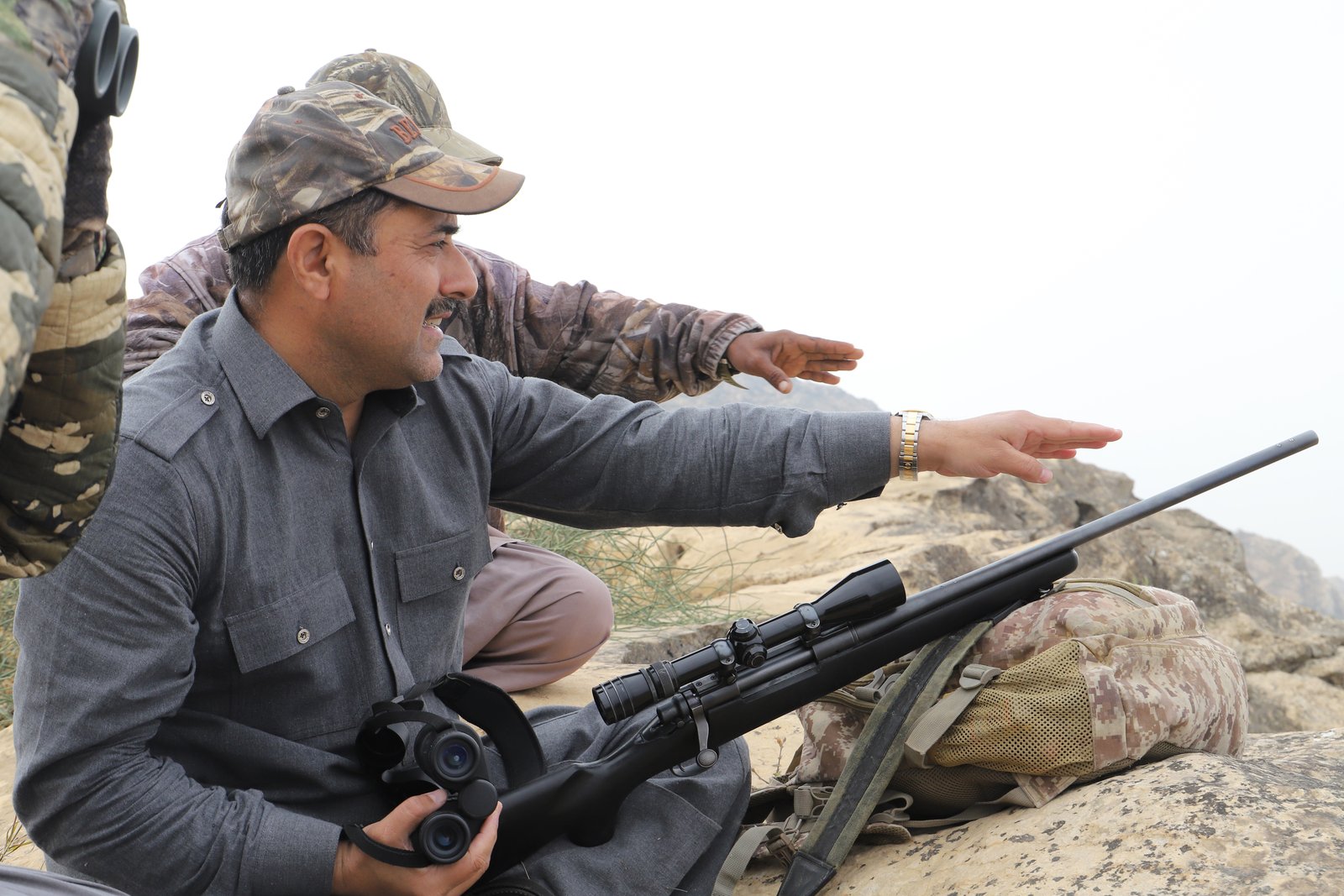
Two rifles may look, on paper, as if they do the same thing — put a bullet on a target at distance. In the field, they behave like different animals. The single most avoidable mistake I have seen shooters make, myself included, is to carry the wrong one for the day’s work.
Two Environments, Two Weapons
Today I want to talk about rifle selection for two very different pursuits: long-range sniping and hunting. They are often spoken of together — and they share their science — but their operating environments are quite different, and the rifle must be chosen accordingly.
A long-range sniper is a team member. Close-in protection and any impromptu, fleeting engagement is handled by the second man of the team, whose select-fire assault rifle is always at hand. The sniper himself concentrates on deliberate precision shots at distance — a very specific role, with a very specific tool.
The hunter, by contrast, is almost always alone or with a single guide. The rifle on his shoulder is the only weapon he has. Targets appear and vanish — most of them fleeting, and most of them, in real terms, inside 500 metres. He may be called upon to shoot on the move, from any posture, in a very few seconds. A heavy, complicated rifle, however precise, is often simply not practical for that life. What he needs is a light, sufficiently accurate rifle that can be deployed in the minimum time.
In the Field — The Hunter
- Alone, or with a single guide
- One rifle on the shoulder — no back-up gun
- Fleeting targets, often inside 500 m
- Shots taken on the move, from any posture
- Speed of deployment is decisive
- Light, robust, quickly on aim
On the Line — The Long-Range Sniper
- Works as a two-man team
- Close-in cover provided by the No. 2’s assault rifle
- Deliberate, precision shots at distance
- Time to build a stable position
- Environmental data is calculated, not guessed
- Heavier, more complex — worth every gram
The Rifle That Served Me for a Lifetime
As a young boy, and even into my late middle age when I was hunting regularly, my rifle of choice was a light hunting outfit — a Remington 700 in .270 Winchester, sitting under a Redfield 3–9× variable scope. It was a robust combination, honest and unfancy, and it was more than good enough to take down game with an incredibly fast, clean strike out to four hundred metres and a little beyond. I remember with satisfaction how rarely I lost an opportunity in those years, and how many good trophies came home because the rifle was always ready before the moment was gone.
A Trusted Hunting Outfit
Light, honest, and always ready before the moment is gone.
- RifleRemington 700 — bolt-action, sporter weight
- Calibre.270 Winchester — fast, flat, effective
- OpticRedfield 3–9× — variable, all-around
- Effective RangeTo ~400 m — deer-sized game
The Detour into the Long Range
Somewhere in my early fifties I became more involved in long-range sniping and F-Class shooting. Higher-end rifles came into the safe — extremely precise instruments, but heavier, more complicated, and inevitably slower to bring to bear. I remained in that world for about ten years, and I enjoyed every hour of it.
Then I returned to big-game hunting — still carrying those long-range rifles. The result was frustrating in ways I had not expected. I began to miss great opportunities — not by missing the shot, but by not being able to take one. The rifle needed time to deploy properly; it was not built to release a clean shot at the drop of a hat, from whatever posture the ground happened to offer. If I did manage to press the trigger, the shot was so rushed that I missed. More than once, it was quietly embarrassing.
“I was missing great opportunities — not by missing the shot, but by not being able to take one.”
Back to Business
So I went back to my hunting rifles — the ones that had cost, incidentally, a small fraction of my fancy long-range setups. I settled a proper point-blank zero, noted my hold-offs on a deer-sized target out to five hundred metres, and was back in business. The efficiency and accuracy returned almost immediately. The lesson had cost me a few seasons; I hope, by writing this, it costs the reader nothing.
The Lesson, in a Line
Everything I have said above comes down to a single sentence: always select the rifle for its intended use.
For the hunter chasing deer-sized game out to five or six hundred metres, a lightweight, robust rifle of about 2 MOA paired with a 6× scope — preferably of fixed power — is exactly what the work asks for. Beyond five hundred metres, and for the real-life scenarios that occasionally demand it, a long-range portable rifle is worth considering. But do not confuse the two roles. Carrying a target rifle into a hunting field, or a hunting rifle onto a thousand-metre line, is a formula for disappointment — and it is precisely this kind of avoidable failure that pushes many promising shooters out of the sport before they have properly begun.
Sniping is a different game altogether. Its rifle, its optic, its posture and its rhythm all belong to another conversation — one I will take up in these pages another day.
Some lessons are paid for in missed opportunities and quiet embarrassments before they are earned. This one was worth the tuition.
— Field Journal · Essay No. 02 —
Compare Products
Items